

The term transgender refers to someone whose gender identity does not align with the social expectations corresponding to their sex assigned at birth.
Conversely, the term cisgender refers to people whose gender identity aligns with their sex assigned at birth.
Gender identity refers to an innate sense of self relating to the gender roles and expectations within a given society. Examples of gender identities include man, woman, non-binary, agender and more. Someone’s gender expression – the way they present their gender externally through clothing, accessories, hairstyle, makeup, mannerisms and other factors – is different from gender identity. For example, a person may dress what society considers feminine but not identify as a woman.
Someone’s sex refers to their sex traits or characteristics including components such as hormones, external or internal genitalia and brain chemistry. Sex assigned at birth is the classification that someone is given at birth by a medical professional, typically based on a visual assessment of external characteristics.
Some examples of people who may identify as transgender include: a person born with a vulva or female sex traits who identifies as a man,
a person born with a penis and testes who identifies as a woman
non-binary people who identify as genderqueer, gender neutral and/or gender free (people who do not identify as either a man or a woman male or female).
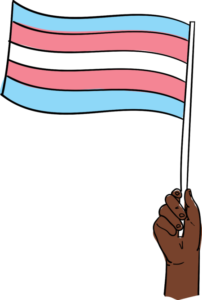
Being transgender is a normal human condition or way or being. Cultures throughout history and across the world have stories of transgender people in their histories. However, many cultures that experienced colonization had rigid gender roles forced upon them, including the erasure of gender identities outside of man or woman.
Most people start to know and understand their own gender identity around ages 3-5; this includes both transgender and cisgender people. Some people may share their gender identity with others from an early age, while others may keep it secret. Some youth don’t discover that they are transgender until their body begins to change during puberty. There is also a rise in the number of middle age and older adults coming out as transgender.
Only you can know and understand your own gender and make choices on how and when to share this with others.