

“Diversity is all around us and we all want to serve our clients the best way we can … This training offers an opportunity to engage in conversations and learn about things that might not always be at the front of our minds but are important to the clients we serve.”
Our Training Centre has reached over 75,000 professionals across Calgary, Alberta and beyond in the last 15 years. We were thrilled to recently receive funding from RBC to expand our 2SLGBTQ+ inclusion training with rural organizations, particularly those serving newcomer and Indigenous communities. This funding allows us to train organizations at no cost to them.
We spoke with Kyle, one of our Training Centre Facilitators, about why this work matters, how organizations can take advantage of this funding and what they can expect to learn.
What is this grant and what will it support?
This funding will help us do more 2SLGBTQ+ training in rural settings. We are lucky to have received this grant in the past, and this iteration shifts the focus a little bit to be more specific around newcomer- and Indigenous-serving organizations. Organizations that work primarily with those populations are typically underserved, especially in rural settings, so we’re really happy about this opportunity.
Why focus on rural organizations, specifically newcomer-serving organizations?
Often finances play a role. Some of these organizations are smaller than they would be in an urban setting and may get less funding. So the goal is to remove some of those financial barriers to accessing training.
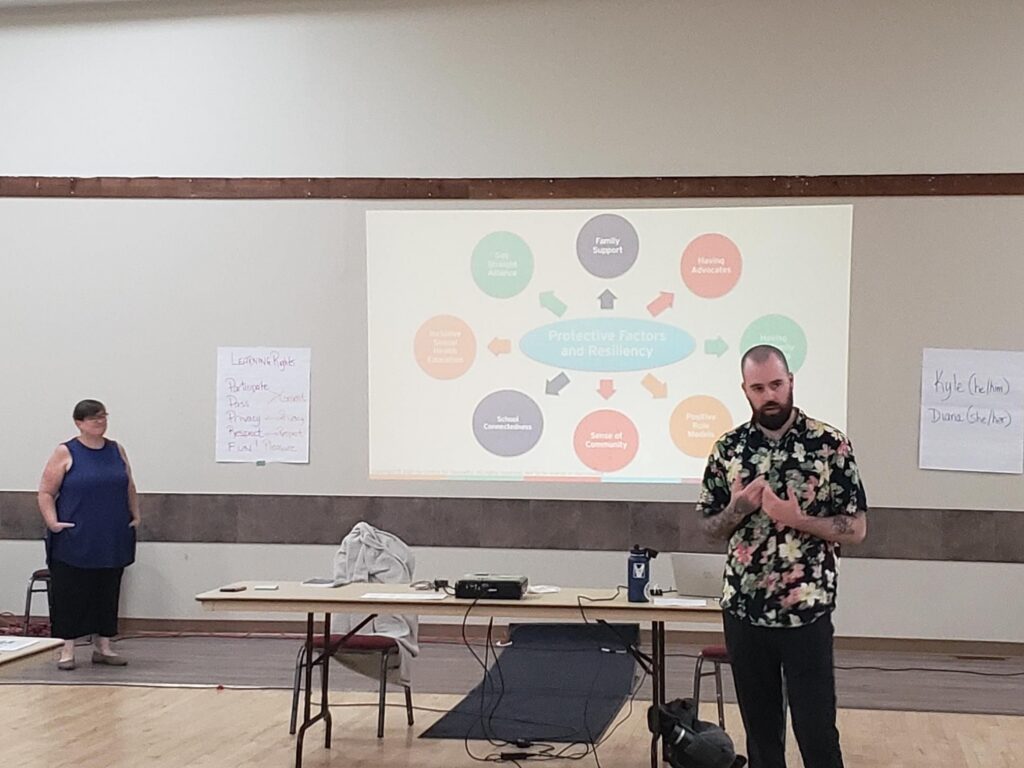
These organizations are also often overloaded. They are already doing so much by helping with the many services that newcomers need, so education and training around these topics can sometimes fall to the side. This is an opportunity for us to jump in and help organizations that are taking on a lot. It helps set gender and sexually diverse newcomers up in a really great way so that they’re working with professionals who can support them and help them feel more comfortable.
How are rural organizations experiencing this work differently?
Some rural organizations are a little more underserved and underfunded. In some of the workshops I’ve done in rural settings, participants talk about the pushback they’re getting around inclusion and 2SLGBTQ+ issues and they ask how they can ensure a safe space for everyone. They want the right language, strategies and bystander engagement tools to deal with some of the rhetoric that’s out there in their communities. Playing a role in helping to create that safety is a really rewarding experience.
If an organization isn’t sure whether this training is for them, what would you say?
The cool thing about this grant is that it’s for any rural organization who wants to be better equipped in serving and supporting 2SLGBTQ+ clients and colleagues; newcomer-serving agencies are a focus but it’s not a necessity.
What I would say to organizations who aren’t sure if this is a fit for them is: Diversity is all around us and we all want to serve our clients the best way we can. They are likely working with and supporting 2SLGBTQ+ clients, whether or not they have specific services for this population. This training offers an opportunity to engage in conversations and learn about things that might not always be at the front of our minds but are important to the clients we serve.
What can organizations expect from the workshops?
This funding allows us to offer any of our workshops focusing on 2SLGBTQ+ inclusion. This includes our foundational workshop Creating a Culture of Respect for Gender and Sexual Diversity, as well as more specific workshops for professionals working with populations with intersecting identities like Indigenous communities, newcomers, older adults and more. The full list of available workshops is on our website.
We create safety for discussions, disagreements and questions. Our goal is to create an environment where we can have the necessary conversations around the enablers and barriers to 2SLGBTQ+ inclusion. We do this in a way that’s inclusive of anyone who wants to work with us no matter where they are in their journey. So whether it’s building foundational knowledge about creating safer environments or practicing working through challenging scenarios, organizations can expect a session that helps them meet their specific goals around inclusion.
Where can organizations learn more?
We’re looking to provide this free training to 1,000 professionals by August 2026. Folks who want to learn more can contact Gillian, our Training Centre Client Development Coordinator.