
What is Gender Identity?
Gender identity is the term used to talk about a person’s own sense of being a man, a woman, or another gender. Only you can know and understand your own gender and can make choices on how to share this with others.
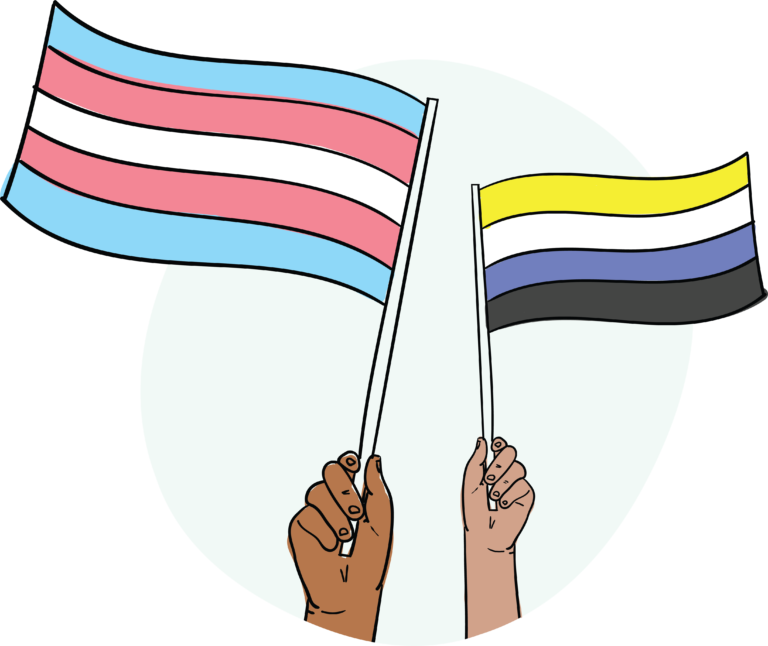
If someone is transgender, this means that the gender they were assigned at birth does not fit them. Transgender people include those born with a vulva who know themselves as a boy or man, or people born with a penis who know themselves as a girl or woman. It also includes non-binary people who identify as genderqueer, gender neutral and/or gender free (people who do not identify as either male or female).
Being transgender is as normal as being human. Most cultures have stories of transgender people in their histories. Just like today, there are stories of celebrating transgender identities but also stories of discrimination. If you haven’t heard of transgender people in history before, this could be a form of discrimination today.
If someone is not transgender they are what is called cisgender. Cisgender means that the gender you were assigned at birth fits and feels fine to you. If you have never questioned your gender or, questioned your gender and felt satisfied with what the doctors and your family have always told you – then you may be cisgender.
Gender Expression
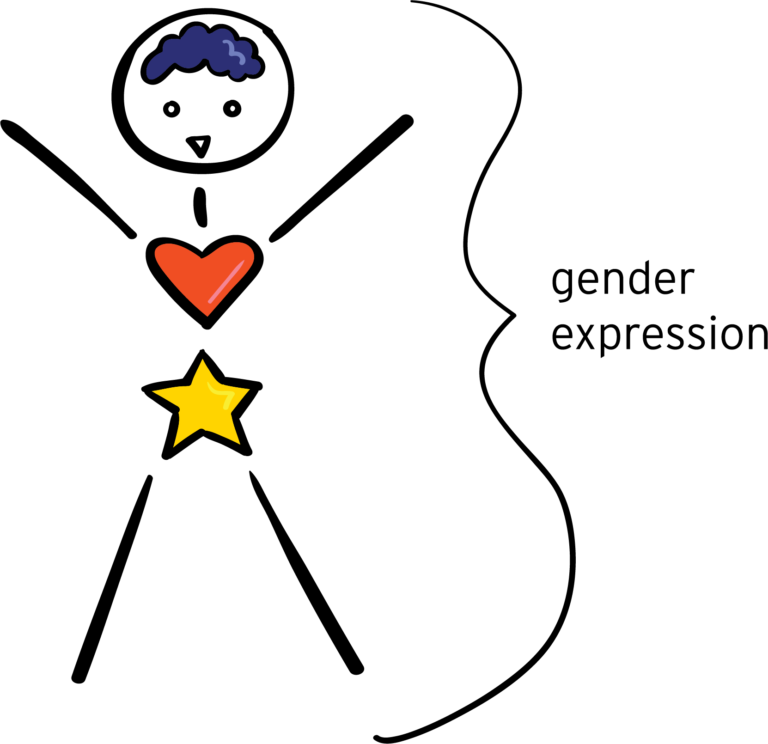
Gender expression is the term used to describe how people show or express their gender to others.
Often, people confuse gender identity and gender expression. Gender expression is based on social and cultural rules and expectations. Gender expression includes things like clothing choices, how long someone keeps their hair, names, pronouns, how people talk, how people move their bodies, and even what types of things people are interested in. Following Canadian social and cultural expectations, we might assume a girl would wear dresses, keep her hair long, have a feminine sounding name, use the pronouns she/her, talk with a soft voice, and be interested in activities like ballet. These are all stereotypes about women and can shift and change over time.
Some people may choose to change their gender expression so that it matches their own understanding of their gender identity.