
Search the Learning Centre
When people show support to the 2SLGBTQ+ community, this is called “being an ally”.
An ally uses their position of safety to advocate for 2SLGBTQ+ people. This can look lots of different ways but is generally an ongoing process.
Allyship begins when a person with intersections of privilege seeks to support a group or individual with different intersecting identities than their own. It’s a practice of learning and re-learning, acknowledging that privilege and oppression exist.
“Ally” isn’t an identity, it’s an action. Allyship is a lifelong process of building relationships based on trust, consistency and accountability. Here are some things you can do to be an effective ally:
- Listen
- Be open-minded
- Be willing to talk
- Do your research
- Don’t assume that everyone you know or meet is straight
- Don’t assume that everyone you know or meet is cisgender
- Speak up to your teacher, principal or boss if you notice things in your school or workspace that may cause harm to 2SLGBTQ+ individuals
- It can be easy to get angry at people who make homophobic and transphobic jokes, but approaching these moments with kindness and compassion can better help the other person on their journey of learning how to respect 2SLGBTQ+ identities.
- Don’t give up. Sometimes you will have to have the same conversation several different ways. Eventually, it makes a difference.
- Know that when someone comes out to you, it means they trust you a lot.
- Talk about 2SLGBTQ+ identities and issues openly and often.
- Don’t assume how someone who has experienced harm or violence wants to be supported. Talk to them to find out what would be helpful for them in that moment.
Supporting Someone Who Comes Out to You
When someone comes out, it can feel very important but also scary for them. If someone is sharing this part of themselves with you, it means they trust you. Here are some things you can say if someone comes out to you:
- “I’m glad you told me”
- “Thank you for trusting me enough to tell me”
- “I love you”
- “I support you no matter what”
- “What kind of support do you need from me?”
Listening to someone who has come out to you, mirroring the language they use for themselves and focusing on what they need from you are great ways to show respect and care.
Being an Engaged Bystander
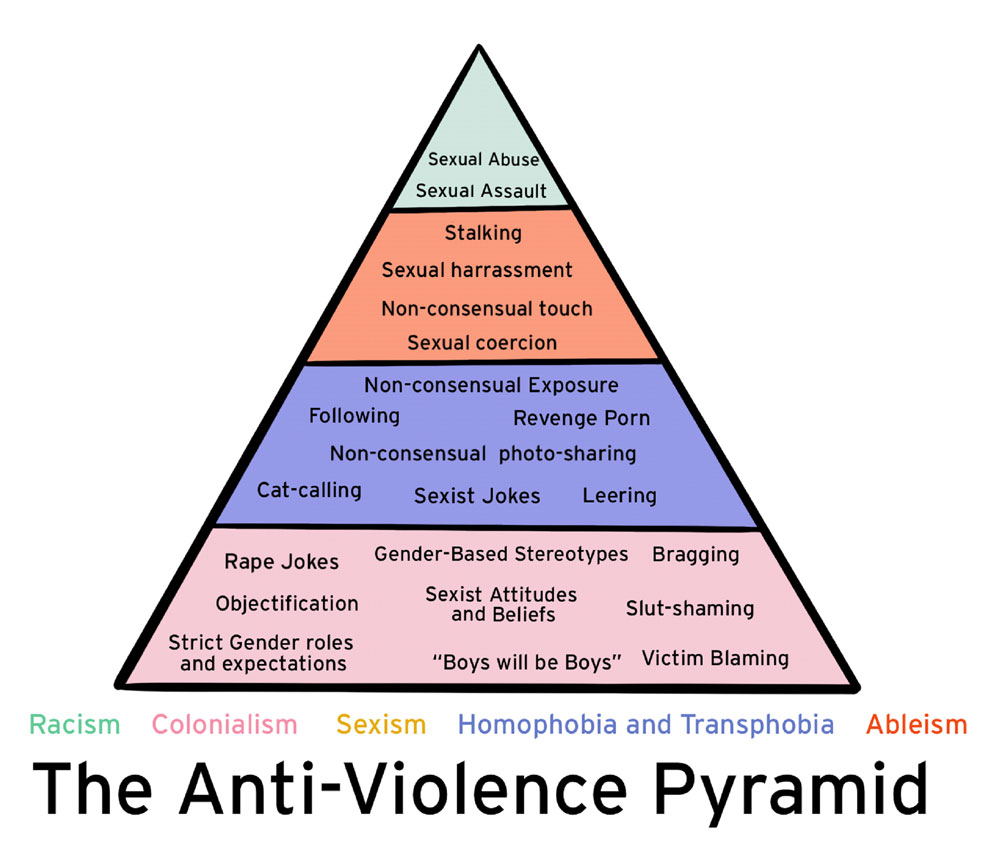
An important part of being an ally is being an engaged bystander when you witness harassment, bullying or discrimination. Being an engaged bystander means you are able to empower the person experiencing harassment, while providing teachable moments to those engaging in it.
The 5 D’s
The five D’s are a tool to help you remember what to do when you witness harassment:
- Detect: Recognize all forms of harassment, violence, and other forms of harm
- Direct: Intervene in a direct and immediate way by stepping in.
- Distract: Redirect/interrupt to remove focus from the affected party.
- Delegate: Get help from someone else.
- Delay: Follow-up with the affected person or relevant people after the fact.
The DESC Communication Tool can be used when you encounter harmful behaviour.
- Describe what you observe. Describe the other person’s actions and behaviour. (“When you…”)
- Express how their actions and behaviour are impacting you. Use feelings words. (“I feel…”)
- Specify: Be specific about what change you need from them. (“I need…”)
- Clarify the benefits of change by finding common ground. (“Then we can…” or “How do you feel about that?”)
Want to know more? Our Training Centre provides bystander training workshops. Learn more here.